Sunday, August 30, 2015

GREATEST UI !!!!


University-of-Ibadan


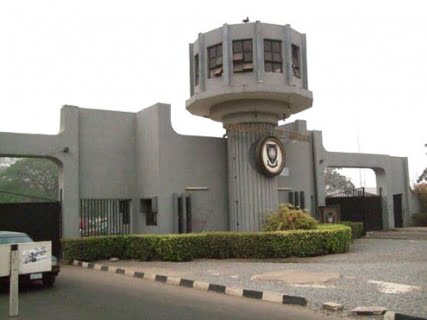
The National University Commission (NUC), has released its annual university rankings and named University of Ibadan in Oyo state as the top tertiary institution in Nigeria.
The body, which is responsible for accreditation of schools, put University of Lagos in second place and rated Covenant University as the best private university.
Below is the 2013 Top 100 NUC University Ranking in Nigeria.
2013 TOP 100 University In Nigeria by NUC
1. University of Ibadan, UI
2. University of Lagos, Unilag
3. University of Benin, Uniben
4. Obafemi Awolowo University, OAU
5. Ahmadu Bello University, Abu
6. University of Ilorin, Unilorin
7. University of Jos, Unijos
8. University of Port Harcourt, Uniport
9. University of Maiduguri, Unimaid
10. University of Agriculture, Abeokuta,
11. Lagos State University, Lasu
12. Federal University of Technology, Futo
13. Covenant University, CU
14. University of Nigeria, UNN
15. Federal University of Technology, Futa
16. Nnamdi Azikiwe University, Unizik
17. Enugu State University of Science and Technology, Esut
18. Pan African University
19. Ladoke Akintola University of Technology. lautech
20. Modibbo Adama University of Technology
21. African University of Science and Technology
22. University of Uyo, Uniuyo
23. Bayero University Kano, Buk
24. Ambrose Alli University, AAU
25. Redeemer’s University,
26. Babcock University
27. Federal University of Technology,
28. University of Calabar, Unical
29. Michael Okpara University of Agriculture,
30. Ajayi Crowther University
31. Bowen University
32. Rivers State University of Science and Technology, Rsust
33. Lead City University
34. Crawford University
35. Abubakar Tafawa Balewa University, ATBU
36. Abia State University, Absu
37. Usmanu Danfodio University,
38. Igbinedion University
39. Imo State University, Imsu
40. Niger Delta University
41. Bells University of Technology
42. Kwara State University
43. Nasarawa State University
44. Caleb University
45. Obong University Obong
46. Adekunle Ajasin University
47. Ekiti State University,
48. American University of Nigeria
49. Joseph Ayo Babalola University
50. Veritas University Abuja
51. Afe Babalola University
52. Kaduna State University Kaduna
53. Osun State University Oshogbo …
54. Umaru Musa Yar’Adua University Katsina
55. Federal University, Ndufu-Alike Ndufu-Alike
56. Salem University Lokoja
57. Novena University Ogume
58. Achievers University, Owo Owo
59. Benson Idahosa University Benin City
60. Ebonyi State University Abakaliki
61. University of Abuja Abuja
62. University of Mkar Mkar
63. Madonna University Okija
64. Bingham University Auta Balifi
65. Plateau State University Bokkos
66. Federal University of Petroleum Resources Effurun
67. Federal University, Dutse Dutse
68. Nigerian Turkish Nile University Abuja
69. Ibrahim Badamasi Babangida University Lapai
70. Landmark University Omu-Aran
71. Delta State University, Abraka Abraka
72. University of Agriculture, Makurdi Makurdi
73. Renaissance University Enugu
74. Federal University, Otuoke Otuoke
75. Tai Solarin University of Education Ijebu-Ode …
76. Federal University, Oye-Ekiti Oye …
77. Kano State University of Technology Wudil
78. Tansian University Umunya …
79. Akwa Ibom State University Uyo
80. Baze University Abuja
81. Kebbi State University of Science and Technology Aliero
82. Benue State University Makurdi
83. Adeleke University Ede
84. Ondo State University of Science & Technology Okitipupa
85. Kogi State University Anyigba
86. Western Delta University Oghara
87. Federal University, Wukari Wukari
88. Paul University Awka
89. Caritas University Enugu
90. Federal University, Lafia Lafia
91. Cross River University of Science & Technology Calabar …
92. Fountain University Oshogbo
93. Al-Hikmah University Ilorin
94. Godfrey Okoye University Ugwuomu-Nike
95. Oduduwa University Ile Ife
96. Anambra State University Uli
97. Olabisi Onabanjo University Ago Iwoye …
98. Federal University, Lokoja Lokoja
99. Federal University, Kashere Kashere
100. Rhema University Obeama-Asa

Boko Haram doesn't mean Western Education is a sin.

    Boko Haram gets lost in translation. Oh, and the word 'boko' isn't derived from the word 'book.'


What's the real meaning of "Boko Haram?" I've been wondering about this recently since news articles are constantly informing me (including ones on this website) that it means "Western education is a sin." 
I was surprised that Nigeria's Hausa language, spoken by the mostly Muslim group that is dominant in the northern half of the country, would have a four letter word that meant "western education." Haram has always been obvious - a borrowed word from Arabic that refers to things that are forbidden in Islam (as opposed to things that are halal, or permitted).
I wondered if it was an acronym, or a mash-up of two other words. So I started looking around and struck gold with a paper by Paul Newman, professor emeritus in linguistics at Indiana University and one of the world's leading authorities on the Hausa language.
It turns out the Hausa language doesn't have a four-letter word that means "Western education." It isn't a mash-up or an acronym. What it has is a word that came to be applied to a century-old British colonial education policy that many Hausa-speakers saw as an attempt, more-or-less, to colonize their minds. 

Starting in 2009, Wikipedia's article on the Hausa "Boko alphabet" incorrectly asserted that the word derived from "book." It was corrected two days ago, when someone noticed Newman's article. 

Wikipedia's entry on Boko Haram likewise carried the falsehood for at least a year and a half until it was partially corrected at the end of last month, though  still allowing a falsehood to persist on equal footing with the truth: "The term "Boko Haram" comes from the Hausa word boko figuratively meaning "western education" (often said to be literally "alphabet", from English "book", but the Hausa expert Paul Newman says it derives from a Hausa word with meanings such as "fraud" as "inauthenticity".)"First, some information needs to be dispensed with. The word is often described as being borrowed from the English word "book." Not so, as Dr. Newman's work makes clear.

Often said? A dangerous phrase. This is how we end up with lazy reporters who parrot what they read on Wikipedia or what they read in other news stories (who were often, in turn, parroting from Wikipedia or other reporters.)
And it doesn't stop there. Newman found the US National Counterterrorism Center started passing along the "book" claim circa 2011 (it still is), and cites nine other instances in works by academics and polemicists like the anti-Islam activist Pamela Geller. The press is an even bigger megaphone.

Newman writes that "boko" has a variety of meanings focused around denoting "things or actions having to do with fraudulence, sham, or inauthenticity" or deception. He says the false linkage to the English word "book" was first made in a 1934 Hausa dictionary by a Western scholar that listed 11 meanings for the word – ten of them about fraudulent things and the final one asserting the connection to "book." An incorrect assertion, says Newman. 
A big deal? Not a huge one, but a good example of how received "facts" are often far from the truth.
I'm more interested in the current claims that Boko can be translated as "Western education." Does it? Sort of, but not really.
Let's go back to the British colonialists in northern Nigeria. In their aggressive push for modern secular schooling – and the resistance from Muslims – lies the spark for Boko Haram's murderous rampages against "Western" education.
Newman writes about the history of the word's use in this context:
The correct answer was implicitly presented by Liman Muhammad, a Hausa scholar from northern Nigeria, some 45 years ago. In his study of neologisms and lexical enrichment in Hausa, Muhammad (pp. 8-10) gives a list of somewhat over 200 loanwords borrowed from English into Hausa in the area of “Western Education and Culture”. Significantly, boko is not included. Rather one finds boko in his category for western concepts expressed in Hausa by SEMANTIC EXTENSION of pre-existent Hausa words.
According to Muhammad, boko originally meant “Something (an idea or object) that involves a fraud or any form of deception” and, by extension, the noun denoted “Any reading or writing which is not connected with Islam. The word is usually preceded with ‘Karatun’ [lit. writing/studying of]. ‘Karatun Boko’ therefore means the Western type of Education."
Newman explains that when Britain's colonial government began introducing its education system into Nigeria, seeking to replace traditional Islamic education (including replacing the Arabic script traditionally used to write Hausa with a Roman-based script that they also quickly called "boko") , this was seen as a "fraudulent deception being imposed upon the Hausa by a conquering European force."
Rather than send their own children to the British government schools, as demanded by the British, Hausa emirs and other elites often shifted the obligation onto their slaves and other subservients. The elite had no desire to send their children to school where the values and traditions of Hausa and Islamic traditional culture would be undermined and their children would be turned into ’yan boko,’ i.e., “(would-be) westerners”.

Newman accepts (as can been in the passage above) that "boko" is reasonably associated with "Western education" in English translation today. But the actual resistance was to something being imposed by triumphant foreigners. I suspect that an imposition of a Japanese or Chinese or Indian educational system would have been just as boko (in the sense of "bogus") to the Hausa elites of a century ago as the British imposition. And it would probably not go down well today. 

What a little reading about the group's name reveals is that their desire is not to obliterate non-Islamic education all over the world. Just in their own backyards. While that does not make their behavior in Nigeria any less horrific, recognizing that this group is inwardly focused (like most Islamist militants throughout history) is useful to start trying to understand what the US, the rest of the "West," Nigeria, and anyone else should do about the situation. 


Obasanjo and Jonathan encouraged corruption, stealing and looting of our oil sector.

President Muhammadu Buhari Tuesday accused past governments of encouraging corruption in the oil sector.
Buhari said he was disappointed at the way Nigeria’s oil industry had been handled since he left office as a former petroleum minister and as a military Head of State in 1985.
Buhari was quoted in a statement by the President’s Senior Special Assistant on Media and Publicity, Garba Shehu, Buhari as making this observation during a meeting he had with a delegation of the Revenue Mobilisation, Allocation and Fiscal Commission at the Presidential Villa in Abuja.
The president specifically heaped the blame on governments for the current situation in which Nigeria is forced to spend billions of naira annually on subsidies for petroleum products.
He said he was sure that there would not have been any need for the huge subsidies currently being paid to importers if the development of the country’s domestic refining capacity and petroleum products distribution network had kept pace with national demand.
“They (past administrations) allowed the infrastructure to collapse so that their cronies can steal by bringing in refined products from overseas,” Shehu quoted the President as saying.
He therefore urged the chairman and members of the RMAFC, who availed him of their view on petroleum subsidy payments, to come up with more humane proposals to rescue ordinary Nigerians from what he described as the “wicked manipulation” of the country’s oil industry by corrupt operators.
The President said that the Nigerian National Petroleum Corporation, the Nigerian Ports Authority and other MDAs, which previously relied on the laws establishing them to retain all or part of the revenues collected by them, did so illegally and must now comply with the Nigerian Constitution by paying all revenues into the Federation Account.
Buhari was also said to have flayed the RMAFC for approving what he called “excessive remunerations” for some political office holders.
.

Kongi vs OBJ

Soyinka
Professor Wole Soyinka
Nobel laureate, Prof. Wole Soyinka has taken a swipe on former president Olusegun Obasanjo, describing him as an unrepentant liar and illiterate. He was responding to questions during a programme tagged: ‘An evening with Wole Soyinka’, organised by Globacom on Friday.
When asked to respond to Obasanjo’s assessment of him in the former president’s book titled ‘My Watch’, where he noted that Soyinka is good at hunting and wines but a political illiterate, Soyinka said that he was hardly bothered because he believed that Obasanjo was a liar. Soyinka said, “Obasanjo is entitled to his opinion. But the question is: ‘Who respects the opinion of a liar?
“I can spend the whole night proving that he is a liar. Obasanjo was once described by an economist, the late Prof Ojetunji Aboyade, as an economic illiterate. They nearly ‘went into blow’ that night. It was Prof. Mabogunje who separated them. “So, if an economic illiterate calls somebody a political illiterate, no problem at all.
“In ‘ My Watch’, Obasanjo told the first lie when he said he deplored lies. Anybody who said he never plotted to have an unconstitutional third term in office, even as a writer, I need a word to describe him.”
He had said, “For Wole, no one can be good, nor can anything be spot-on politically except that which emanates from him or is ordained by him. His friends and loved ones will always be right and correct, no matter what they do or fail to do. He is surely a better wine connoisseur and a more successful aparo (guinea fowl) hunter than a political critic.
“Wole Soyinka is a gifted man. I have always acknowledged that but he is a bad politician and I have also always said that. That is my own point of view. He may agree with it, he may not agree with it. For instance, I know that if I want somebody to give me the best wine, one of the people I will go to is Wole Soyinka and I know he has a taste for good wine and I said that in the book.”
Soyinka had, in a piece entitled, ‘Watch and Pray, Watch and Prey’, vehemently protested such a description (of him), calling Obasanjo ‘’an expert liar, who lies to boost his ego.’’
But in an interview granted a private television station, Channels, on a programme tagged, ‘Book Club’, Obasanjo, while holding on to his words, said what he wrote about Soyinka was purely his view, adding that Soyinka did not have to agree with him.
Thanks Professor Soyinka for airing in out BOLDLY. Nigerians ALL know that Obasanjo isn't just a liar, he is a bloody thief. He stole from the country when he made himself petroleum minister but acts as though he is the only saint in Nigeria. Would the media kindly stop giving the idiot cheap publicity?
Agbaya ni Obasanjo!

Anti-corruption probe should start with Obasanjo’s regime’

President Muhammadu Buhari has been urged to extend the investigation to Third Republic under President Olusegun Obasanjo.

Samuel Ugwoke, national president of Senior Staff Association of Nigerian Universities (SSANU) who gave the charge at the National Executive Council meeting/Pre-National Delegate Conference in Jos, Plateau State, stressed the need for holistic probe and recovery of looted public funds by previous administrations.
Ugwoke, who pledged the union’s support for the Buhari’s administration, asked the Presidency not to be selective in the fight against corruption.
“Corruption has killed this country. We have heard of billions and trillions of naira being looted by officers of government and all of them starched abroad, not even in our country not even in our own banks.
“They use Nigerian money to grow and improve the economy of other countries, leaving us in poverty. SSANU supports the fight against corruption but with a caveat, Mr. President should pursue whoever has stolen our money to return it to our coffers.
“The probe of the looters should not be selective, it should be total, that is the stand of SSANU. It should be total and be extended to 1999, so that those who have killed this country since 1999 should be brought to book,” he said.
He noted that some individuals in the country have become richer than the country itself, urging the present administration to put necessary mechinery in place for effective management of revenue accruing from oil resources.
“This is a country where an individual is richer than a country and he made his money from the country.
“We are endowed with oil wells  and these oil wells were given to individuals who do not have the capacity, even in oil technology or in the business or economics, but they were given to them because of their positions in federal government, because of their positions in the society,” he said.

KEHINDE AKINTOLA.
[culled from Business Day]

Hundred Days of Buhari !.

As President Muhammadu Buhari marks his first 100 days in office, we note with joy the positive atmosphere that has enveloped the nation and the renewed hope and optimism it has engendered among Nigerians that ‘change’ has indeed come and that we have begun the journey to achieving our deferred dream of making Nigeria a great country. Since after Nigeria’s independence in 1960, never has there been such a groundswell of optimism in our collective ability to resurrect the ‘crippled and sleeping giant’ of a nation and begin to position it to achieve its manifest destiny of being the voice of and leading Africa and the black world.
Right from the day of his swearing-in, President Buhari made it clear that this would be a new beginning for the country and that he would wage a relentless war against insecurity, corruption and impunity. True to his words, he set about almost immediately on a shuttle diplomacy to rally Nigeria’s neighbours to act in concert to defeat the Boko Haram insurgents that had been terrorising the country and, recently, neighbouring countries. He visited Chad, Niger, and Cameroon, and hosted a summit on the Lake Chad Basin Commission. These visits achieved the important aim of starting and deploying the Multi National Joint Task Force (MNJTF) with headquarters in N’Djamena, Chad, to comprehensively tackle the Boko Haram menace. Between these, he also travelled to Germany, South Africa, the United Kingdom, and the United States – all aimed at winning key supports, assistance and friends for the country in the fight against insurgency.
Expectedly, the president wasted no time in sounding the battle cry in the war against corruption and impunity, which many Nigerians have identified as among the main reasons for our national malaise. Through his body language and some concrete steps taken, like the change of guards at the NNPC and other institutions, the president indicated clearly that it would no longer be business as usual and that his administration would vigorously pursue and prosecute corrupt and erring officials. He has been particularly successful in building a national consensus against, and intolerance of, corruption and impunity encompassing the media, civil society groups and the general public. He is also determined to see to the recovery of looted funds stashed in foreign accounts/countries by corrupt government officials and has sought the help of the international community, particularly the United States and United Kingdom, to achieve this.
However, we are constrained to point out that despite the groundswell of support for the war on corruption and the posturing of the administration in this area, no one has as yet been charged to court for corruption. What appears to be happening is a carefully orchestrated campaign of calumny, terror, and media trial that may not conform to the rule of law.
For instance, there was a media blitz against the former National Security Adviser (NSA), Sambo Dasuki, to the effect that he purchased fake military hardware and could not account for a large cache of funds meant for the purchase of military equipment. This led to a commando-like storming of his house in Abuja and his father’s house in Sokoto by the Department of State Security with all the drama that went with it. To our utmost shock, when he was charged to court, he was only charged over offences relating to possession of firearms without licence and not the corruption/mismanagement the administration had earlier touted. This is a dangerous signal. Government must stop the smear campaign and media trials on citizens and take its cases to the courts if there is evidence of corruption on anyone.
Again, even after several denials, and despite our best efforts to ignore the trend, the president’s appointments thus far have shown a tendency towards provincialism, and this is already generating tension among Nigerians, on social media and elsewhere. We are strictly in favour of merit-based appointments as sine qua non for the country to move forward. However, we urge the president to take into account the fragile nature of Nigeria’s unity and extend his searchlight to other sections of the country as he seeks to appoint only highly qualified people of good repute and integrity.
It can bear stressing that President Buhari is not the president of Northern Nigeria alone and must not allow himself to be seen as such. We recall the resounding line in his inaugural speech: “I belong to everybody and I belong to nobody”. We, therefore, urge the president to live up to the letter and spirit of those words and not fritter the goodwill that came with his elections and the early days of his administration. Understandably, many people in his party are now angry and embarrassed at what they termed his unilateral and sectional appointments and actions. As one of the president’s backers recently commented on social media, “A president who ran for election on the mantra of change can’t continue the tradition of invidiously clannish appointments and expect to continue to enjoy national goodwill.”
All said, we agree with Gregory Kronsten, an analyst, that “the president has been very active in the three months since the handover on 29 May”. Even though he has not appointed his ministers, he has, however, “wielded the axe at leading public agencies and indicated policy preferences for a number of industries such as textiles and aviation”.
Going forward, we urge the president to seize the opportunity of the moment to build a national consensus and unite the entire country around the quest for growth and development. The clock is ticking.
[Culled from Business Day]